“We now accept the fact that learning is a lifelong process of keeping abreast of change. And the most pressing task is to teach people how to learn.” - Peter Drucker
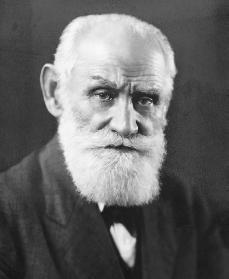 |
| IVAN PAVLOW |
Regarding today’s lesson, I’ve learnt that learning can be categorize into many forms. One of those is classical conditioning, was first discovered by Ivan Pavlow through his work in digestion in dogs which involves the reflex and the stimulus. As well as supporting factors which helps to conduct the experiment more detailed and precise

Ivan Pawlow’s experiments holds many concepts such as:
·
Neutral stimulus
· Unconditioned stimulus
· Conditioned stimulus
· Unconditioned responses
· Conditioned response
· Stimulus generalization
· Stimulus discrimination
· Extinction
· Reinforcer
· Spontaneous recovery
· High-order conditioning
· Unconditioned stimulus
· Conditioned stimulus
· Unconditioned responses
· Conditioned response
· Stimulus generalization
· Stimulus discrimination
· Extinction
· Reinforcer
· Spontaneous recovery
· High-order conditioning

Next is conditioned emotional response, an emotional
response to learned stimulus in other words the influence of a certain item
which triggers your emotional response through stimulus.
Types of conditioned emotional response
- Vicarious conditioning
- Conditioned taste aversions
 |
| Skinner's box |
Moving on, operant conditioning is a learning process which consequences
which follows the response determined whether the behavioural will be repeated
or not in other words voluntarily through good or bad experiences such as the
choices and decisions you made in life.
Operant conditioning is categorized into two terms:
- Thorndilce’s Law of Effect
- Skinner’s box
 |


Very good website, thank you.
ReplyDeleteRamacharita Manash By Dayanidhi Khadiratna