SOCIAL FACILITATION
·         The tendency of the people around you to affect positively or negative in doing an easy task simply put ‘an improvement in performance produced by the mere presence of others’.
·         The negative influences are called Social Impairment


SOCIAL LOAFING
·         The tendency in putting less or any effort for the cause or work due to favorable circumstances
·         Effort or contribution are considered as meaningless or pointless since at the end the results will still be the same regardless
 
The image depicts how some individuals does not contribute in supporting group work
SOCIAL COGNITION

  • A sub-topic focuses on how people:
-          Process
-          Store
-          Apply knowledge in situations
  • Focuses on the role that cognitive processes play in our social environment


ATTITUDES
1.       A settled way of thinking about someone or something


ABC MODEL
TYPES
DEFINITION
EXAMPLES
AC
(Affective Compound)
Involve internal emotion about an attitude object
“I’m scared of spiders”
BC
(Behavioural Compound)
Involves the influences that decides on how to react on the attitude object
“I will avoid and run from spiders”
CC
(Cognitive Compound)
Involves a person’s belief or knowledge prior to attitude object
“I believe spiders are dangerous”


Social psychology --- The scientific study of how a person’s thoughts, feelings, and behavior are   

                                    influenced by the real, imagined, or implied presence of others


 Social psychology emphasizes the influence of situations on behavior. People often find it difficult to see the role that powerful situations play in producing their own and others' behavior, and they are inclined to overemphasize the importance of personal dispositions in producing behavior.


Sociology --- the study of people and how they interact with society.


Social influence--- The process through which the real or implied presence of others can directly or                        indirectly influence the thoughts, feelings, and behavior of an individual. 


Social influence takes many forms and can be seen in conformity, socialization, peer pressure, obedience, leadership, persuasion, sales and marketing.


Conformity - changing one’s own behavior to match that of other people.


As all we know, our life have a lot of challenges and obstacle as we are facing through different kind of human and behavior everyday. Life can be fun if we know how to manage it properly and systematically in order to turn life from keeping burdening us. As a student, college life might be a little bit stressful with works, assignments, and somehow lecturer also can be one of the factor students keep stressing out. We know that psychology means scientific study of mental process and behavior. So, we are going to cover one topic which is Stress and Health for the readers to know more deeper about how stress can relate with our health and daily life activities. I hope you guys ready for the amazing adventures to know more about stress so you can solves your problems and enjoy the life. First of all, the basic thing you need to know is what is the real definition of stress?

  Stress is the term used to describe the physical, emotional, cognitive, and behavioral responses to events that are appraised as threatening or challenging.For your information, stress have its own terms such as Stressors, Distress,and  Eustress. Stressors are events that cause a stress reaction.  Distress is the effect of unpleasant and undesirable stress. Eustress is the effect of positive events, or the optimal amount of stress that people need to promote health and well-being.Other than that , stress have the positive and the negative effect! Cool right. We are going to give you some information of the causes of stress in the passage below. 

ARE YOU READY?


CATASTROPHE


Let say you have engaged before this and you have been working so hard for it. You and your fiance' have been waiting for a many years to wait for the right time and both of you work so hard to save money for your wedding ceremony. Everyone know how future bride and bridegroom feel right. Everything is about to done. You have buy everything you need , settle up for the food, hall, in order to make that day the best day in your life and then suddenly

Oh My Fish

Your fiance' died in a car crash before the wedding day. All the preparation have been done and you have ready to put a ring on her. All the guest have recieved their invitation cards to your wedding while parents were busy to make it more perfect. You have lost your fiance' and all the plan ruined up


Now, with this kind of situation, predict will you react the same thing in this picture? How would you feel if you lost kind of everything, the most important day in your life, the day that you have been wait for a so long time. This kind of situation is called a Catastrophe, which is defined as an unpredictable, large-scale event that creates a tremendous need to adapt and adjust as well as overwhelming feelings of thread. Related to catastrophe, Post-Traumatic Stress Disorder (PTSD) is a disorder resulting from exposure to a major stressor, with symptoms of anxiety, nightmares, poor sleep, reliving the event, and concentration problems, lasting for more than one month. This is one of the major causes of stress in our community.

HASSLES

Hassles means the daily annoyances of everyday life.


The picture above is the example of bully situation that usually happened at school. We know that bullying some might give us some pleasure but for the person who face it, it is kind of nightmare that make their life more dull. This is the perfect example of hassle that will lead you to stress. I have been bullied before so i know how its feel and true, I'M STRESSING OUT.  Whats worse is that most of the time these immature humans are persistent and consistent with their attitude that it also made people like me experience persistent and consistent stress.

PRESSURE

Pressure is defined as the psychological experience produced by urgent demands or expectations for a person’s behavior that come from an outside source. Everyone have their own responsibilities to take care of. As a student, our main responsibility is to study and achieve our targets for brighter future. Study is not as easy as you pronounce it. We know while we are talking about study, the first thing that will pop out from our head are assignments, home works, class and more. Not all students achieve what they want and when we don't achieve what we want, at that time the pressure will come. We know that our parents are putting their hopes so high to see us be a successful person in future and we carry a big responsibility as a student.


As the result, all the source that related to stress will lead to undesirable and saddening things such as suicide which is an absolutely wasteful thing to do. Unfortunately, the ultimate cause of suicide is undeniably stress which leads to depression and then causes one to commit suicide. Most people believe that suicide is the definite solution to all problems, but the reality is that, it isn't! It only stops the chances of making things better.


HOW DO WE OVERCOME STRESS?

First and foremost, you have to find your own space and manage your time carefully. You have to go for exercises maybe in the morning or afternoon after class and  spend your time outside your room.


By doing exercise, you might as well accumulate yourselves with positive energy when surrounded by nature. It is best to exercise with your friends and families or at least someone to accompany you so that you wouldn't feel lonely aside from safety reasons. You can choose at least one sport that can make you feel comfortable and you feel happy when you did it. As an example, my sport is rugby and I love to play this game. By the time I hit people or make a run to the try line, I feel happy and I dont even think about my problems that keep on burdening me.

Other than that,  get yourself some good night sleep every day so that stress would not occur in the first place. Having a good night sleep is essential as it would help you to charge your body up for the coming days and you would feel refreshed to be more productive each day, thus reducing the risks of experiencing stress. Besides, you have to keep yourself in positive mode. You must enjoy your life especially your teenage life. What can you do? You can go mingles around with friends and family, going out for drinks, party on saturday night, any activity that can make you feel happy so that you can control your emotions.

To conclude, every problems have its own solution. Same goes to stress, you have abundance of choice to solve it either you want to solve it or not. This is roughly about stress and if want to know more, you can read in the Psychology book on page 454. Stay tune !!


Intelligence
“the ability to learn from one’s experiences, acquire knowledge, and use resources effectively in adapting to new situations or solving problems.”


Theories of intelligence: 4 theories

1) Spearman's Theory

       a) g factor- General Intelligence

       b) s factor- Specific Intelligence


2) Gardner's Theory 


3) Triarchic theory of intelligence

Sternberg’s theory that there are three kinds of intelligences: analytical, creative, and practical.


4) Emotional intelligence is the ability to manage one's own emotion.


Intelligence Quotient (IQ) Test


IQ is a number representing a measure of intelligence.


Test to measure your IQ :


1) Stanford-Binet 


2) Wechsler Tests


Development of IQ Test

1)Standardization .
2)Validity
3)Reliability 


What is "thinking"? How "thinking" can be explained simply?

What is "thinking process" ? 
how thinking works?
What basic logic is involved in "thinking" ?
Can "How to think" be learned?
What is "think differently" ?

Thinking cognition is basically mental activity associated with processingunderstanding, and communicating information.

Mental images is a mental representations that stand for objects or events and have a picture like quality.


Concept is a mental grouping of similar things, events, and people that is used to remember and understand what things are, what they mean, and what categories or groups they belong to. 

For example, if I say to you, "think of a car," the concept, "car" will evoke some ideas in your head about what a car is and what types of characteristics it contains -- does your concept of a car have black tires, two doors, four doors, is it red, white, black, etc ?


The concepts are arranged in a hierarchy with a superordinate concept at the top, followed by basic level type, and subordinate concept.

There are also formal concept and natural concept :-

Formal concepts are concepts that are clearly defined by a set of rules or properties. Each member of the concept meets all the rules or has all the defining properties, and no nonmember does. 

Example: A square is  formal concept. All members of the concept are shapes with four equal sides and four right-angle corners. Nothing that is not a square shares these properties.

Natural concepts are defined by a general set of features, not all of which must be present for an object to be considered a member of the concept. 

Example: The concept of vegetable is a natural concept. There are no rules or lists of features that describe every single vegetable. Many vegetables are difficult to recognize as such because this concept is so "fuzzy." Tomatoes are not vegetables, but most people think they are. Rhubarb is a vegetable, but most people think it is not.

prototype is the best example of a natural concept. 

Example: Try this trick on your friends. Have them sit down with a pencil and paper. Tell them to write down all the numbers that you will say and the answers to three questions that you will ask. Recite about fifteen numbers of at least three digits each, and then ask your friends to write down the name of a tool, a color, and a flower. About 60 to 80 percent of them will write down "hammer," "red," and "rose" because these are common prototypes of the concepts tool, color, and flower. Prototypes come to mind most easily when people try to think of a concept.


Problem Solving is a process of cognition that occurs when a goal must be reached by thinking and behaving in certain ways.

Trial and error (mechanical solution) is a problem-solving method in which one possible solution after another is tried until a successful one is found.
 

Algorithms is a very specific, step-by-step procedures for solving certain types of problems


Heuristic is an educated guess based on prior experiences that helps narrow down the possible solutions for a problem. Also known as a “rule of thumb.”


Insight is a sudden perception of a solution to a problem.


Problem-Solving Barriers

1) Functional fixedness 

2) Mental set 

3) Confirmation bias 


MENTAL SET


CONFIRMATION BIAS


Creativity is the process of solving problems by combining ideas or behavior in new ways.


1) Convergent thinking: a thinking that only lead to one answer based on past knowledge.

2) Divergent thinking: a thinking from one point can come up to various ideas.


“We now accept the fact that learning is a lifelong process of keeping abreast of change. And the most pressing task is to teach people how to learn.” - Peter Drucker
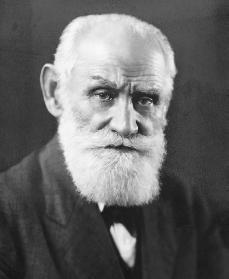
IVAN PAVLOW

Regarding today’s lesson, I’ve learnt that learning can be categorize into many forms. One of those is classical conditioning, was first discovered by Ivan Pavlow through his work in digestion in dogs which involves the reflex and the stimulus. As well as supporting factors which helps to conduct the experiment more detailed and precise


Ivan Pawlow’s experiments holds many concepts such as:

·         Neutral stimulus
·         Unconditioned stimulus
·         Conditioned stimulus
·         Unconditioned responses
·         Conditioned response
·         Stimulus generalization
·         Stimulus discrimination
·         Extinction
·         Reinforcer
·         Spontaneous recovery
·         High-order conditioning


Next is conditioned emotional response, an emotional response to learned stimulus in other words the influence of a certain item which triggers your emotional response through stimulus.
Types of conditioned emotional response
  • Vicarious conditioning
  • Conditioned taste aversions

Skinner's box

Moving on, operant conditioning is a learning process which consequences which follows the response determined whether the behavioural will be repeated or not in other words voluntarily through good or bad experiences such as the choices and decisions you made in life.
Operant conditioning is categorized into two terms:
  • Thorndilce’s Law of Effect
  • Skinner’s box